


Formation e-learning - Prévention du risque ATEX en Anglais - Atex risk prevention e-learning training
In industrial environments, explosive atmospheres (ATEX) can present serious hazards to workers, equipment and facilities. Understanding these risks and following appropriate safety procedures are essential to preventing accidents.
The ACN Group e-learning course “ATEX Risk Prevention” provides the knowledge and practical guidance needed to identify hazardous situations and work safely in potentially explosive environments.
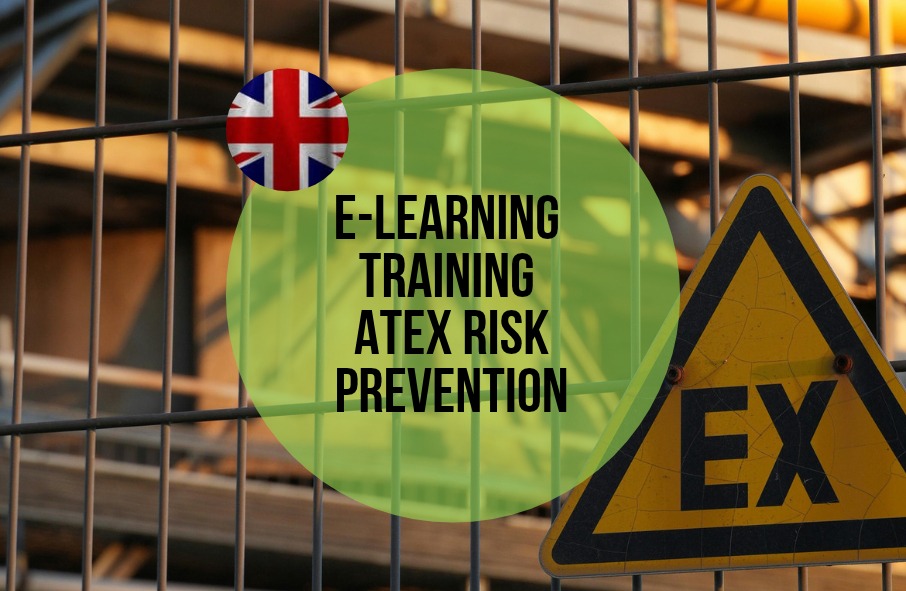
You will learn to understand the conditions that can lead to an explosion, including the six elements of the explosion hexagon, to better recognize the factors contributing to explosive atmospheres. This course will also help you identify ATEX hazardous zones and understand the significance of “Ex” markings, enabling you to recognize classified areas and adopt appropriate safety measures.
You will discover how to differentiate between combustible substances and potential ignition sources, while learning to interpret equipment markings to ensure that the equipment used is suitable for the relevant ATEX zone.
Finally, you will develop the ability to follow essential safety procedures during operations, recognize hazardous situations and respond appropriately to equipment malfunctions or abnormal conditions.
A practical, safety-oriented course designed to strengthen your understanding of ATEX hazards, promote safe working practices and reduce the risk of explosions in industrial environments.
Durée
3 Heures
Taux de réussite
100 %

Disponible en classe virtuelle
Non
Formation e-learning - Prévention du risque ATEX en Anglais - Atex risk prevention e-learning training
In industrial environments, explosive atmospheres (ATEX) can present serious hazards to workers, equipment and facilities. Understanding these risks and following appropriate safety procedures are essential to preventing accidents.
The ACN Group e-learning course “ATEX Risk Prevention” provides the knowledge and practical guidance needed to identify hazardous situations and work safely in potentially explosive environments.
You will learn to understand the conditions that can lead to an explosion, including the six elements of the explosion hexagon, to better recognize the factors contributing to explosive atmospheres. This course will also help you identify ATEX hazardous zones and understand the significance of “Ex” markings, enabling you to recognize classified areas and adopt appropriate safety measures.
You will discover how to differentiate between combustible substances and potential ignition sources, while learning to interpret equipment markings to ensure that the equipment used is suitable for the relevant ATEX zone.
Finally, you will develop the ability to follow essential safety procedures during operations, recognize hazardous situations and respond appropriately to equipment malfunctions or abnormal conditions.
A practical, safety-oriented course designed to strengthen your understanding of ATEX hazards, promote safe working practices and reduce the risk of explosions in industrial environments.
Objectifs pédagogiques
Programme
Pré-requis, public et accessibilité
- Open to all.
Déroulement et méthode pédagogique
- PC MAC, tablet, Android. Internet connection.
- Online training accessible to PRMs.
- Audio description and subtitles not available
- By email to : Support-elearning@groupe-acn.fr
- By telephone on : +33 (0)1.85.76.70.06
- Validation questionnaire and exercises
- Multimedia: images, videos, animations, audio, ...
- Access to the online course.
Calendrier de formation
Réserver votre formationRéférence : MA - EL-SST019 - V2026
Durée conseillée : 3 Heures
Tarif de la formation
Sur demande
Obtenir un devis